ITH Pencil Bag
A Designer’s First Glance: Playful, Polished, and Purpose-Built
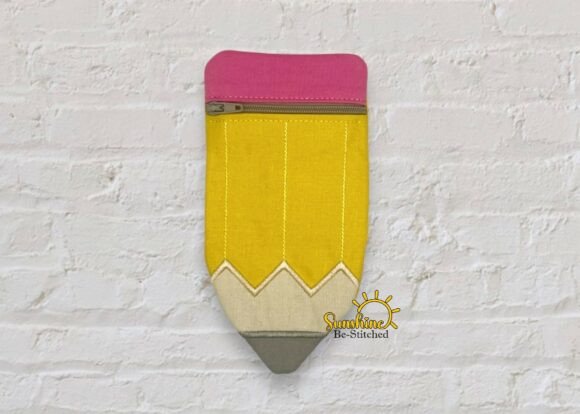
Opening the ITH Pencil Bag embroidery file feels like unboxing a small, thoughtful gift — not flashy, but quietly confident. The layout is clean and intentional: a soft curved silhouette with subtle topstitching lines, a centered zipper tab motif, and just enough detail to read as “pencil bag” at a glance. It doesn’t shout. It invites. As an embroidery designer who’s stitched hundreds of in-the-hoop accessories, I immediately recognize this as a design built for *real use*, not just visual appeal. It leans into charm without sacrificing structure — exactly what you want when your finished product needs to hold pens, markers, or even tiny embroidery scissors without sagging or puckering.
Where It Shines: Real Projects, Real Customers
Last week, I used ITH Pencil Bag as part of a custom back-to-school bundle for a local boutique: embroidered tote bags paired with matching pencil pouches for teachers. We stitched the ITH Pencil Bag onto cotton twill with medium-weight cutaway stabilizer — and the result landed perfectly. Customers loved how it looked *finished*: no raw edges, no hand-sewing, no guesswork. That’s the quiet power of a well-executed in-the-hoop design. It elevates a simple handmade product into something that feels professionally made — which directly boosts perceived value and customer trust.
It works especially well for craft businesses targeting educators, students, creatives, and gift shoppers. Think: personalized back-to-school kits, baby shower favors (swap pencils for pacifiers or teething rings), wedding welcome bags (monogrammed + filled with mini notebooks), or boutique-branded merchandise. As an Etsy seller, I’d list it as both a digital embroidery file and a ready-made finished product — because the design translates cleanly across both formats. It also pairs beautifully with coordinating machine embroidery designs on tote bags, sweatshirts, or aprons without competing visually.
What to Watch For: Texture, Tension, and Tiny Details
Like any in-the-hoop project, ITH Pencil Bag demands attention before going live. Its success hinges on fabric choice and stabilization. On thin or loosely woven fabrics — think lightweight cotton poplin or rayon challis — I recommend testing with tear-away *under* and cutaway *on top* to prevent show-through or distortion around the zipper area. Stretchy fabrics (like jersey or ribbed knits) require extra care: stabilize aggressively, reduce stitch density if possible, and consider adding a light fusible interfacing layer beneath the hoop area.
The design includes fine satin-stitched accents — likely for the zipper pull or stitching lines — and those can blur on dark or napped fabrics (like fleece or terry cloth). Always test thread color contrast: a light gray thread may disappear on charcoal twill, while white-on-ivory can look washed out. And if you’re stitching on curved surfaces — say, a baseball cap visor or a rounded pillow cover — know that the flat, rectangular format of ITH Pencil Bag won’t adapt naturally. Stick to flat or gently contoured items: tea towels, notebook covers, patch panels, or standalone pouches.
Design Integrity Meets Commercial Practicality
One thing that stands out is how the ITH Pencil Bag balances decorative appeal with functional clarity. It’s not overly dense — no heavy fill stitches that risk stiffness or cracking after washing — and the running stitch outlines give it definition without overwhelming the eye. That makes it ideal for products meant for daily use: classroom supplies, travel kits, or kids’ lunchbox accessories. Buyers notice when embroidery feels *alive*, not stiff or pixelated — and this design delivers that tactile authenticity.
For small shop owners and digital product sellers, its versatility is a real asset. You can use it as-is for physical goods, or deconstruct elements (the pencil icon, the zipper shape) as standalone design assets for printable mockups or branding kits. Just remember: if you plan to sell finished items commercially, confirm the license allows for resale of physical products — and if you’re bundling it with other embroidery files, verify compatibility with common formats (DST, PES, JEF) and typical home-hooping sizes (5x7" minimum recommended).
Designer Notes You’ll Actually Use
- Always stitch a test on scrap fabric first — especially with new stabilizer combos or unfamiliar thread brands.
- Check small details under magnification: Does the zipper tab hold crispness? Are corners sharp or slightly rounded? That tells you about stitch density and digitizing quality.
- Review it in black-and-white mockups — many buyers browse thumbnails before clicking. Does it retain identity without color?
- Compare performance on light vs. dark backgrounds — thread sheen changes dramatically, and satin stitches can look dull on matte black fabric.
- Use proper stabilizer: Medium cutaway for most woven fabrics; tear-away + topping for napped or fuzzy surfaces.
- Confirm hoop size early — don’t assume it fits your smallest hoop. Some versions may need 6x10" for full clarity.
- Ask yourself: does this support my brand voice? If your shop leans minimalist or modern, ITH Pencil Bag’s friendly, approachable aesthetic fits. If you specialize in ornate heirloom work, it may feel too simple — and that’s okay.
Final Thought: A Quiet Workhorse, Not a One-Off Gimmick
ITH Pencil Bag isn’t trying to be the star of your portfolio — it’s the reliable teammate that helps your other designs shine. It’s the kind of embroidery file that makes customers pause mid-scroll, imagine gifting it, and click “add to cart” without hesitation. In a market flooded with overly complex or trend-chasing machine embroidery designs, its thoughtful simplicity is its strongest feature. Whether you're building a craft business, personalizing gifts, or expanding your digital product line, ITH Pencil Bag earns its place in your embroidery library — not as decoration, but as a tool.