Teachers Plant Seeds Wildflower
A Designer’s First Glance: Delicate, Meaningful, and Quietly Confident
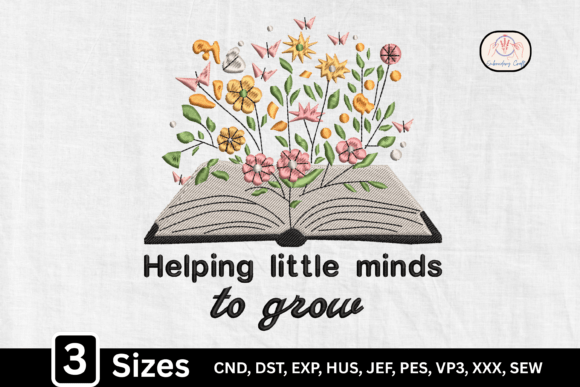
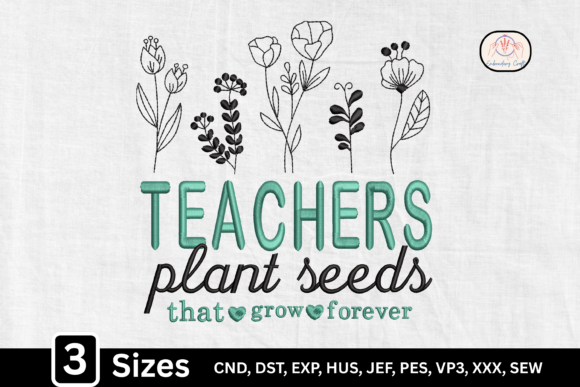
When I opened Teachers Plant Seeds Wildflower for the first time, I didn’t see just another school-themed embroidery file—I saw a quiet moment of intention. The composition balances soft wildflowers with gentle script, evoking growth, patience, and care without leaning into cliché. It’s not oversized or bold like many teacher-themed designs; instead, it breathes. That matters—especially when you’re stitching for real people who’ll hold, wear, or gift the finished product.
Real-World Test: A Linen Tote Bag for Back-to-School Teacher Appreciation
Last week, I stitched Teachers Plant Seeds Wildflower onto a natural linen tote for a local boutique’s “Thank You, Educator” launch. Why linen? Because it’s textured, unforgiving, and beloved by conscious shoppers—and because that’s where this design shines: in thoughtful, tactile contexts. The wildflower motif isn’t overly dense, so it didn’t buckle or pucker on the loosely woven fabric. The lettering stayed legible at 3.5 inches wide—not too small to read, not so large it overwhelmed the bag’s clean lines. Customers paused. They smiled. One teacher ran her finger over the satin-stitched petals and said, “It feels like it was made *for* me.” That’s the difference between decoration and resonance.
Where This Embroidery File Truly Fits (and Where It Doesn’t)
Teachers Plant Seeds Wildflower excels in projects where warmth and sincerity outweigh flash:
- Personalized gifts: Pillow covers for new teachers, baby onesies celebrating educator parents, or tea towels for school staff lounges
- Boutique merchandise: Small-run sweatshirt embroidery for PTA fundraisers or embroidered patches for student leadership programs
- Digital product strategy: As a high-quality embroidery file for Etsy sellers offering custom school apparel—it pairs beautifully with neutral palettes and minimalist branding
- Holiday & seasonal use: Stitched on lightweight cotton napkins for Teacher Appreciation Week or as part of a spring-themed nursery decor bundle
But here’s what I’d caution against: cramming it into tiny hoop sizes (under 4x4 inches), using it on highly stretchy jersey for t-shirts without proper stabilizer, or applying it to dark fabric without testing thread contrast first. The delicate stems and fine lettering rely on clarity—not compression. On curved surfaces like caps, the topmost flower cluster may distort slightly unless digitized with cap-friendly underlay (check your file notes—or test).
Stitching Clarity Meets Emotional Impact
This isn’t a high-density fill-stitch powerhouse. It uses thoughtful stitch types: subtle running stitches for vine-like accents, smooth satin stitch for petals, and clean fill areas for leaves. That means less bulk, better drape on lightweight fabrics, and fewer thread breaks mid-run. For a craft business owner stitching 20+ totes a week, that reliability adds up. More importantly, the visual personality holds up in photos—critical for Etsy listings or Instagram mockups. I tested it in black-and-white printable mockups, and the silhouette remained instantly recognizable. That’s gold for digital embroidery file sellers building trust through consistency.
What Makes It Feel “Handmade,” Not “Mass-Produced”
There’s a slight asymmetry in the wildflower arrangement—petals tilt organically, stems curve with variation. It avoids robotic repetition, which elevates perceived value. Buyers notice that. When someone pays $48 for an embroidered apron, they’re not just buying fabric—they’re buying intention. Teachers Plant Seeds Wildflower supports that story. It doesn’t scream “school”; it whispers “care.” That nuance helps small shop owners stand out next to big-box teacher gifts.
Practical Designer Notes Before You Stitch
Before committing to a client order or production run, do these five things:
- Test on scrap fabric—especially if using textured, dark, or thin materials. Watch how the fine script reads at your intended size.
- Review stitch density in your embroidery software. If the file includes multiple color stops, confirm whether the wildflower centers are layered intentionally (e.g., light thread over dark) or if they risk sinking into background fills.
- Confirm hoop size compatibility. While the design fits comfortably in a 5x7, verify if smaller versions exist—or if resizing below 3 inches compromises legibility.
- Inspect small details manually: the tip of the smallest leaf, spacing between “seeds” and “forever,” and edge definition on curved petals.
- Check licensing before selling finished products or bundling the embroidery file digitally. Some School category files allow commercial use; others don’t. Don’t assume.
Final Thought: A Design That Grows With Its Purpose
I’ve reviewed hundreds of embroidery files tagged “teacher,” “education,” and “school”—many loud, many literal, many forgettable. Teachers Plant Seeds Wildflower is different. It doesn’t shout achievement; it honors presence. That makes it versatile: equally at home on a baby blanket stitched by a grandparent who taught for 32 years, or on a sleek black apron worn by a Montessori guide. It works because it respects both the craftsperson’s skill and the recipient’s humanity. If you’re choosing embroidery files for real projects—not just pixels on a screen—this one earns its place in your active design assets. Just remember: let it breathe, stabilize wisely, and stitch with the same care the design itself embodies.