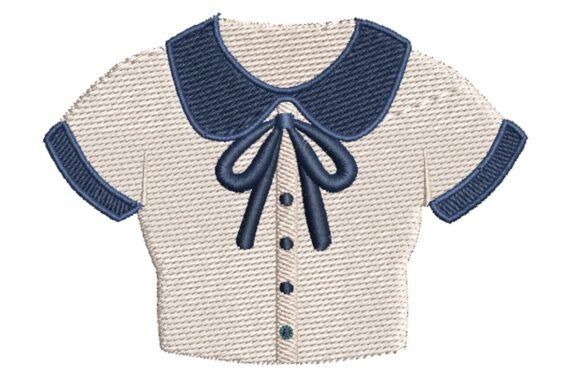
Girl’s School Uniform Blouse
First Impression: Sweet, Nostalgic, and Instantly Recognizable
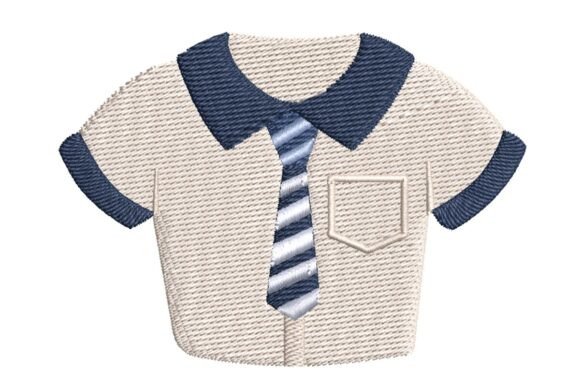
As an embroidery designer who’s prepped over 200 craft fair booths, I’ll say it straight: Girl’s School Uniform Blouse lands with quiet charm—not loud, not trendy, but deeply evocative. It reads as soft, elegant, and gently nostalgic—think vintage classroom daydreams, not strict academia. The light-colored blouse paired with that dark blue Peter Pan collar and bow tie creates strong visual contrast, making it immediately legible at a glance. That’s gold for craft fairs, where shoppers scan your table in under three seconds. It’s not farmhouse, not modern-minimal, not rustic—it’s *timeless-cute*, which means it bridges generations: moms buying for daughters, teachers gifting colleagues, grandmas stitching keepsakes.
Where This Design Shines on Craft Fair Products
Girl’s School Uniform Blouse isn’t a one-size-fits-all embroidery file—it thrives where storytelling and sentiment meet utility. Here’s how it performs across your most common handmade products:
- Tote bags: Perfect as a centered 4–5” design on the front pocket or lower corner—softens the utilitarian vibe and adds boutique appeal. Works especially well on natural canvas or oatmeal linen.
- Aprons: Ideal above the pocket or subtly on the bib. Its structured collar and bow tie echo classic apron silhouettes—enhances handmade quality without overwhelming.
- Tea towel embroidery: A standout when placed diagonally near the hem. The collar’s clean lines read beautifully against textured cotton, and the bow tie adds a touch of whimsy customers love to photograph.
- Embroidered patches: Highly effective at 2.5–3”. Clean edges, balanced proportions, and clear focal points (collar, bow, buttons) mean it holds up beautifully when cut and ironed on.
- Caps and pouches: Use with caution—curved surfaces and small real estate can blur fine details. Best scaled to 2” max on caps; ideal for 4×6” fabric pouches where the full silhouette shines.
- Pillow covers and market bags: Strong as a large-scale (6–7”) focal point—especially on cream or pale gray linen. The symmetry and gentle formality elevate perceived value instantly.
What Makes It Sell—And What Requires Care
This machine embroidery design earns trust fast. Its clarity, recognizable motif, and Back To School relevance mean it converts well both in-person and online—especially in Etsy listings where “school uniform embroidery” and “vintage girl aesthetic” are rising search terms. Buyers intuitively understand it: no decoding needed. As a small shop product, it feels premium without being pretentious.
But here’s what demands attention before you load it into your hoop:
- Button details and bow tie folds: These likely carry higher stitch density. On textured towels or thick fabrics, they may flatten or look muddy unless stabilized properly.
- Small collar points and bow loops: Can lose definition below 2.25”. Avoid shrinking further for patches or cap fronts unless you’ve tested on scrap first.
- Dark blue thread on dark fabric: Will vanish. Always test thread colors against your base fabric—especially for commercial embroidery where consistency matters.
- Tri-color coordination (implied by “coordinating tri”): Confirm thread count and color names in your digital embroidery file. Ambiguity here risks mismatched bows or collars in batch production.
Booth Impact & Buyer Engagement
In a crowded craft fair aisle, Girl’s School Uniform Blouse stands out through emotional resonance—not flash. I’ve watched customers pause, smile, and say, “That’s my daughter’s school!” or “My first-grade teacher wore one just like that.” That micro-moment of connection is where sales begin. When displayed as a trio—on a tea towel, a mini tote, and a framed patch—it builds narrative cohesion across your booth. It also photographs exceptionally well for printable mockups: clean lines, high-contrast elements, and balanced negative space make your Etsy seller listings pop without heavy editing.
Practical Designer Notes Before You Stitch
Before cutting fabric or uploading to your embroidery machine:
- Test the design on scrap fabric matching your intended product—especially for towels, denim, or coated canvas.
- Check thread contrast: light blouse + dark collar needs at least two clearly distinct thread colors. Don’t assume default palettes match your vision.
- Review spacing between buttons and collar edge—tight spacing can cause puckering on lightweight fabrics.
- Confirm hoop size compatibility. If your file requires a 5×7” hoop but you’re embroidering on narrow apron straps, adjust placement or scale accordingly.
- Inspect stitch density in collar corners and bow loops—over-stitched areas may require lighter stabilizer or reduced density in editing software.
- Use tear-away stabilizer for smooth fabrics; cut-away for knits or stretchy blends. Skip fusible if heat sensitivity is a concern.
- Create at least one real finished product—not just a mockup. See how it drapes, wears, and photographs in natural light.
- Compare fabric colors side-by-side: ivory vs. off-white vs. ecru changes how the dark blue collar reads.
- Verify commercial licensing status. If selling embroidered tote bags or patches as a finished product, ensure your digital embroidery file permits end-use resale—not just personal use.
Final Thought: A Quiet Workhorse for Handmade Brands
Girl’s School Uniform Blouse won’t shout—but it will linger. It’s the kind of embroidery file that strengthens brand consistency across your Back To School collection, adds heirloom warmth to everyday items, and quietly signals craftsmanship. For Etsy sellers, boutique makers, and craft fair veterans alike, it’s not just another machine embroidery design. It’s a conversation starter, a memory trigger, and a reliable small shop product that sells because it feels *true*. Just remember: respect its details, test with intention, and let its gentle elegance do the talking.